Measuring Success in Social Media Marketing: Key Metrics and Tools for Effective Analysis
In today’s digital-first business landscape, brands cannot rely on assumptions to grow online. Posting content regularly is not enough. Businesses must measure, analyze, and optimize their strategies to ensure consistent results. Measuring success in Social Media Marketing is essential for understanding performance, improving engagement, and driving measurable business growth.
Without proper tracking, Social Media Marketing becomes reactive instead of strategic. From monitoring engagement levels to analyzing conversion data, companies must rely on performance metrics to maximize return on investment (ROI). This guide explores the most important key metrics and tools required for effective analysis and sustainable success.
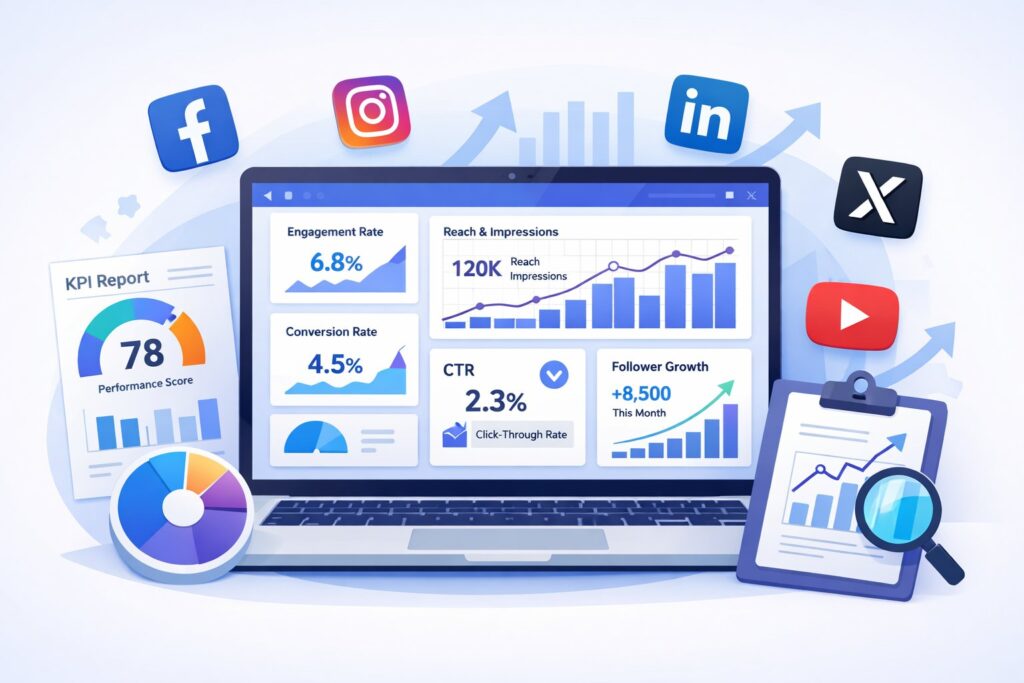
Why Measuring Social Media Marketing Performance Matters
Every business invests time, creativity, and budget into Social Media Marketing campaigns. But how do you determine whether your strategy is actually delivering results?
Tracking performance helps businesses:
- Identify high-performing content
- Understand audience preferences
- Optimize ad spending
- Improve engagement levels
- Increase conversions and revenue
According to data published by Statista, global social media users exceed billions and continue to grow every year. With increasing competition, data-driven Social Media Marketing is no longer optional—it is a necessity.
Key Metrics to Measure in Social Media Marketing
To evaluate the effectiveness of Social Media Marketing, businesses must focus on measurable indicators that align with their goals.
1. Reach and Impressions
Reach refers to the number of unique users who see your content, while impressions represent how many times the content is displayed.
These metrics measure brand visibility. High reach suggests strong awareness, while impressions help assess content frequency. Platforms like Facebook and Instagram provide built-in dashboards to track these numbers effectively.
2. Engagement Rate
Engagement is one of the most valuable indicators of successful Social Media Marketing. It includes:
- Likes
- Comments
- Shares
- Saves
- Link clicks
Engagement rate is calculated as:
(Total Engagement ÷ Total Reach) × 100
A strong engagement rate signals that your content resonates with your audience. According to insights from HubSpot, engagement is often a more meaningful metric than follower count because it reflects active participation rather than passive visibility.
3. Click-Through Rate (CTR)
CTR measures how many users click on your link after viewing your post or advertisement.
Formula:
CTR = (Clicks ÷ Impressions) × 100
A high CTR in Social Media Marketing indicates compelling copy, strong visuals, and clear calls-to-action (CTAs).
4. Conversion Rate
Conversions represent meaningful actions such as:
- Product purchases
- Lead form submissions
- Newsletter sign-ups
- Downloads
Tracking conversion rates helps businesses understand how Social Media Marketing contributes directly to revenue.
Tools like Google Analytics allow marketers to track user journeys, behavior flow, and goal completions. You can learn more about conversion tracking from the official Google Analytics Help Center.
5. Follower Growth Rate
While follower count alone is not a primary performance metric, steady audience growth indicates that your Social Media Marketing strategy is attracting interest and building brand authority.
6. Customer Acquisition Cost (CAC)
CAC measures how much you spend to acquire a customer through paid and organic campaigns.
Formula:
Total Campaign Cost ÷ Number of Customers Acquired
Lower acquisition costs combined with high conversion rates reflect efficient execution.
7. Return on Investment (ROI)
ROI determines whether your efforts are profitable.
Formula:
(Revenue – Investment) ÷ Investment × 100
Positive ROI confirms that your Social Media Marketing strategy generates more revenue than it costs. For a deeper explanation of ROI, refer to Investopedia.
Essential Tools for Measuring Social Media Marketing Success
Manual tracking is inefficient. Modern tools simplify analytics and reporting.
1. Google Analytics
Google Analytics is essential for tracking website traffic generated through Social Media Marketing. It provides insights into:
- Traffic sources
- User behavior
- Conversion paths
- Bounce rate
It helps connect social activity with business outcomes.
2. Meta Business Suite
Meta Business Suite offers in-depth performance data for Facebook and Instagram campaigns, including:
- Audience demographics
- Engagement insights
- Ad performance
- Content reach
It is particularly useful for brands heavily invested in Meta advertising.
3. LinkedIn Analytics
LinkedIn provides performance data tailored to B2B campaigns, making it valuable for companies targeting professionals and decision-makers.
4. Hootsuite
Hootsuite enables marketers to manage multiple platforms from a single dashboard. It supports scheduling, monitoring, and performance reporting across channels.
5. Sprout Social
Sprout Social offers advanced reporting features and competitor benchmarking tools for comprehensive Social Media Marketing analysis.
How to Build a Data-Driven Strategy
Measuring performance only matters if insights lead to action. Follow these steps:
1. Define SMART Goals
Examples:
- Increase engagement by 20%
- Generate 100 qualified leads per month
- Improve conversion rate by 10%
2. Select Relevant KPIs
Choose metrics aligned with your business objectives rather than focusing on vanity numbers.
3. Monitor Performance Consistently
Weekly tracking allows early detection of performance shifts.
4. Optimize Based on Insights
If engagement drops:
- Improve creative visuals
- Test different posting times
- Refine audience targeting
If CTR decreases:
- Strengthen headlines
- Improve CTA clarity
- A/B test ad creatives
Consistent optimization strengthens Social Media Marketing outcomes over time.
Common Mistakes in Social Media Marketing Measurement
Many businesses prioritize likes and follower counts without evaluating deeper metrics. While visibility matters, revenue-driving indicators are more important.
Avoid these mistakes:
- Ignoring conversion tracking
- Failing to compare paid and organic results
- Setting unclear campaign objectives
- Overlooking audience insights
According to Harvard Business Review, organizations that adopt analytics-driven marketing strategies significantly outperform competitors.
The Future of Social Media Marketing Analytics
As artificial intelligence continues to evolve, analytics will become increasingly predictive and automated. Emerging trends include:
- AI-powered performance forecasting
- Advanced sentiment analysis
- Cross-platform attribution tracking
- Automated campaign optimization
Businesses that leverage advanced Social Media Marketing analytics will gain a strong competitive edge in the digital marketplace.
Conclusion
Measuring success in Social Media Marketing is critical for long-term growth. By tracking key metrics such as engagement rate, CTR, conversion rate, CAC, and ROI, businesses can transform data into actionable insights.
Using tools like Google Analytics, Meta Business Suite, and Hootsuite ensures accurate tracking and informed decisions. In today’s data-driven world, combining creativity with analytics is the key to maximizing the impact of Social Media Marketing and achieving sustainable business success.