
How a Well-Structured Site Map Can Improve Your SEO Strategy
In the ever-evolving world of digital marketing, search engine optimization (SEO) remains a cornerstone for online success. While many businesses focus on keywords, backlinks, and content quality, one crucial element often overlooked is a Well-Structured Site Map. This foundational component can significantly impact how search engines crawl, index, and rank your website.
In this blog, we’ll explore how a Well-Structured Site Map enhances your SEO strategy, improves user experience, and boosts your website’s visibility in search engine results.
What Is a Well-Structured Site Map?
A Well-Structured Site Map is a blueprint of your website that outlines its structure, pages, and hierarchy. It helps search engines like Google understand how your content is organized and ensures that all important pages are easily discoverable.
There are two main types of sitemaps:
- XML Sitemap: Designed for search engines to crawl and index your pages efficiently
- HTML Sitemap: Created for users to navigate your website easily
When your website includes a properly organized sitemap, it becomes easier for both users and search engines to find relevant content without confusion.
Why a Well-Structured Site Map Matters for SEO
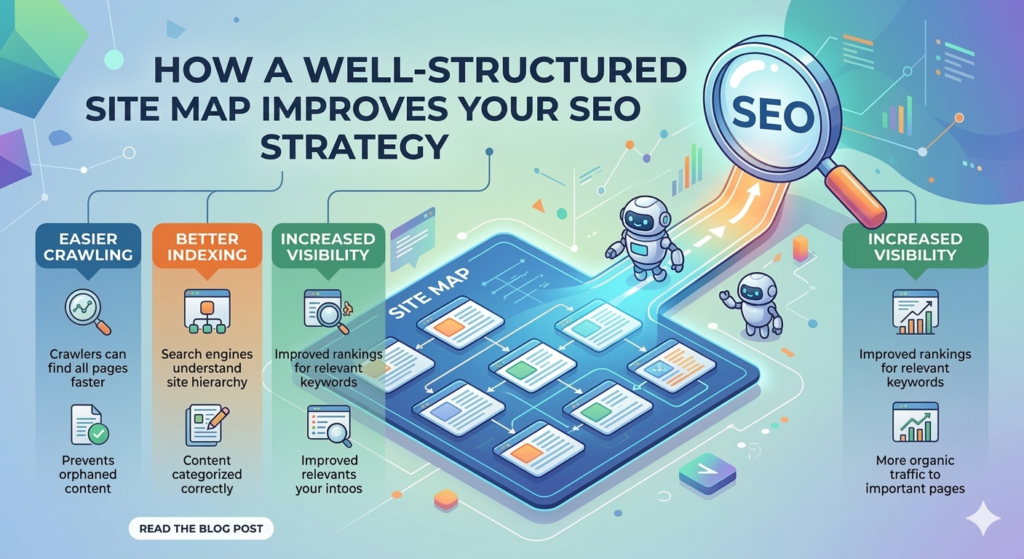
A Well-Structured Site Map plays a vital role in improving your SEO performance. It acts as a roadmap that guides search engine bots through your website, ensuring that no important page is left behind.
1. Improves Crawlability
Search engine bots rely on clear pathways to discover content. A structured sitemap ensures that all pages, including those buried deep within your site, are accessible.
By implementing a Well-Structured Site Map, you make it easier for search engines to crawl your website efficiently.
2. Enhances Indexing
Indexing is the process of storing your web pages in a search engine’s database. Without proper indexing, your pages won’t appear in search results.
A well-planned sitemap helps search engines:
- Identify new pages quickly
- Recognize updated content
- Prioritize important pages
This ensures your website stays relevant and visible in search rankings.
3. Boosts Website Visibility
When search engines can easily understand your site structure, they are more likely to rank your pages higher. A Well-Structured Site Map improves your chances of appearing in search engine results pages (SERPs).
Using a clear and organized sitemap is a best practice that contributes to better visibility and organic traffic growth.
Key Elements of a Well-Structured Site Map
To maximize the benefits of a Well-Structured Site Map, you need to ensure it includes the following elements:
1. Clear Hierarchy
Your sitemap should reflect a logical structure:
- Homepage
- Categories
- Subcategories
- Individual pages
A structured sitemap ensures that this hierarchy is easy to follow for both users and search engines.
2. Relevant URLs Only
Include only important and indexable pages. Avoid adding:
- Duplicate content
- Broken links
- Redirect pages
A clean sitemap improves crawl efficiency and keeps your site organized.
3. Regular Updates
Search engines prefer fresh content. Keep your sitemap updated whenever you:
- Add new pages
- Update existing content
- Remove outdated pages
4. Proper Formatting
Use standard XML formatting for search engines. Ensure your Well-Structured Site Map is error-free and follows best practices.
How a Well-Structured Site Map Improves User Experience
SEO isn’t just about search engines—it’s also about users. A Well-Structured Site Map enhances user experience in several ways:
Easy Navigation
Visitors can quickly find what they’re looking for, reducing bounce rates and increasing engagement.
Better Accessibility
A properly structured sitemap ensures that all important pages are reachable within a few clicks.
Improved Retention
When users can navigate easily, they are more likely to stay longer on your site and explore more content.
Best Practices for Creating a Well-Structured Site Map
To build an effective Well-Structured Site Map, follow these proven strategies:
1. Keep It Simple
Avoid overcomplicating your sitemap. It should be easy to understand and navigate.
2. Limit the Number of URLs
Google recommends keeping each sitemap under 50,000 URLs. If needed, split into multiple files.
3. Use Canonical URLs
Ensure that only the preferred version of each page is included in your sitemap.
4. Submit to Search Engines
Once your sitemap is ready, submit it via:
- Google Search Console
- Bing Webmaster Tools
This helps search engines discover your sitemap faster.
Common Mistakes to Avoid
Even with the best intentions, mistakes can reduce the effectiveness of your Well-Structured Site Map.
Including Non-Indexable Pages
Avoid adding pages blocked by robots.txt or marked as “noindex.”
Ignoring Updates
An outdated sitemap can mislead search engines and hurt your rankings.
Poor Structure
A confusing hierarchy defeats the purpose of having a clear site structure.
The Long-Term SEO Benefits
Investing in a Well-Structured Site Map delivers long-term SEO benefits:
- Faster indexing of new content
- Improved rankings over time
- Better crawl efficiency
- Enhanced user satisfaction
It also strengthens your overall website architecture, making your SEO strategy more sustainable.
Conclusion
A Well-Structured Site Map is more than just a technical requirement—it’s a strategic asset for your SEO success. By improving crawlability, enhancing indexing, and providing a better user experience, it plays a crucial role in boosting your website’s performance.
If you want to stay ahead in the competitive digital landscape, investing time and effort into creating a structured sitemap is essential. When done right, it can transform your website into a search engine-friendly platform that attracts, engages, and converts visitors effectively.
Start optimizing your site today with a Well-Structured Site Map, and watch your SEO strategy reach new heights.