The Future of Digital Marketing: Trends and Strategies for 2026
Digital marketing is evolving faster than ever. As we move into 2026, businesses that want to stay competitive must look beyond traditional tactics and embrace innovation, automation, and personalization. The future Digital Marketing Services landscape is being reshaped by artificial intelligence, changing consumer behavior, privacy regulations, and new digital platforms.
In this blog, we’ll explore the key trends shaping the future of digital marketing and the strategies businesses should adopt to stay ahead in 2026.
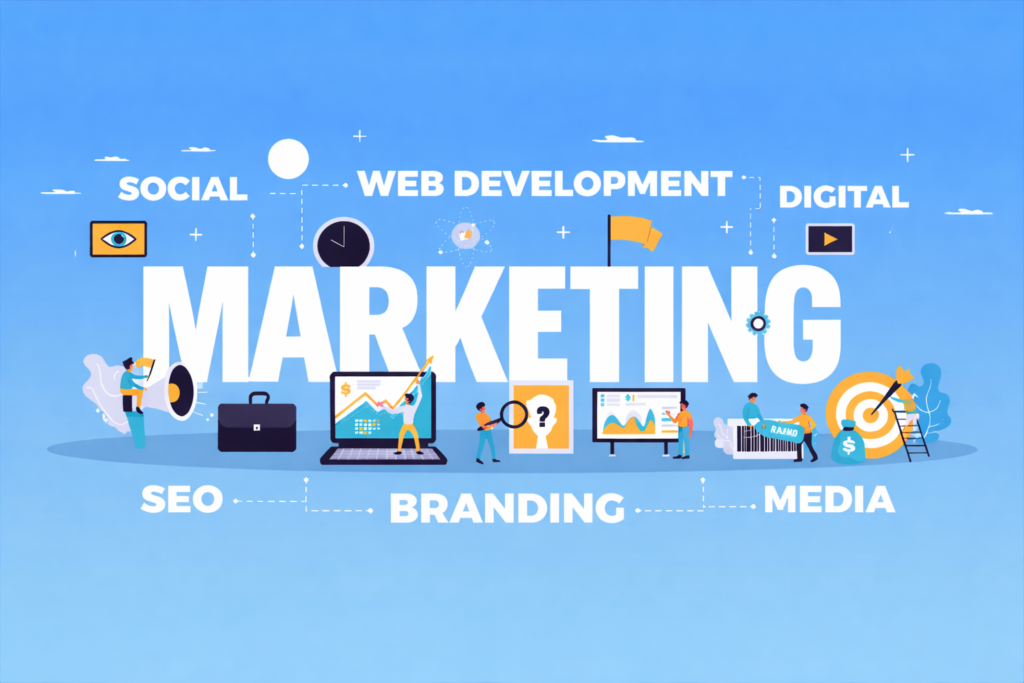
Understanding the Future Digital Marketing Services Landscape
The future of digital marketing is no longer about simply being online—it’s about delivering relevant, real-time, and value-driven experiences across every digital touchpoint. Consumers expect brands to understand their needs instantly, communicate authentically, and protect their data.
As a result, The future Digital Marketing Services will focus on:
- Advanced automation
- Hyper-personalized content
- Ethical data usage
- Immersive and interactive experiences
Let’s break down the most important trends driving this transformation.
1. AI and Automation Will Power Smarter Marketing
Artificial intelligence is no longer optional—it’s foundational. In 2026, AI will be deeply embedded in every aspect of digital marketing.
Key AI-Driven Advancements:
- Predictive analytics for customer behavior
- AI-generated content with human refinementhttps://www.ibm.com/think/marketing/ai-in-marketing
- Automated ad bidding and budget optimization
- Intelligent chatbots and virtual assistants
Businesses leveraging The future Digital Marketing Services will use AI not to replace marketers, but to enhance decision-making, efficiency, and personalization at scale.
2. Hyper-Personalization Will Replace Generic Campaigns
Consumers are tired of one-size-fits-all messaging. In 2026, personalization goes far beyond using a customer’s name in an email.
What Does Hyper-Personalization Include?
- Dynamic website content based on user behavior
- Personalized product recommendations in real time
- Location-based and intent-driven messaging
- Customized marketing funnels for each user segment
Brands that invest in The future Digital Marketing Services will use first-party data and AI insights to create experiences that feel tailor-made for each customer.
3. Privacy-First Marketing Will Build Trust
With stricter global privacy regulations and the decline of third-party cookies, marketers must rethink data collection strategies.
2026 Privacy Trends:
- Greater reliance on first-party and zero-party data
- Transparent data usage policies
- Consent-driven marketing experiences
- Secure data management systems
Trust will be a major differentiator. Companies offering The future Digital Marketing Services must balance personalization with ethical data practices to maintain credibility and compliance.
4. Voice and Visual Search Will Dominate Discovery
Search behavior is changing rapidly. Voice assistants and visual search tools are becoming primary discovery channels, especially on mobile devices.
Optimization Strategies for 2026:
- Conversational, question-based content
- Image and video SEO
- Structured data for voice search results
- Faster, mobile-optimized websites
Optimizing for these formats will be essential for businesses investing in The future Digital Marketing Services, as traditional keyword strategies alone will no longer be enough.
5. Video and Immersive Content Will Lead Engagement
Short-form video, interactive content, and immersive experiences will continue to dominate attention spans.
Content Formats That Will Thrive:
- Short-form and live video
- Interactive quizzes and polls
- Augmented reality (AR) product demos
- Shoppable video content
In The future Digital Marketing Services, content is not just consumed—it’s experienced. Brands that focus on storytelling and engagement will outperform those relying on static content.
6. Social Commerce Will Redefine Online Sales
Social media platforms are rapidly evolving into full-scale commerce ecosystems. By 2026, the line between content and commerce will be almost invisible.
Social Commerce Trends:
- In-app checkout experiences
- Influencer-led product discovery
- Community-driven brand engagement
- Live shopping events
Businesses adopting The future Digital Marketing Services will integrate marketing and sales seamlessly across social platforms to reduce friction and increase conversions.
7. Omnichannel Marketing Will Be Non-Negotiable
Customers interact with brands across multiple channels—websites, apps, email, social media, and offline touchpoints. In 2026, consistency across these channels is critical.
Omnichannel Best Practices:
- Unified customer data platforms
- Consistent brand messaging
- Cross-channel automation
- Seamless customer journeys
The future Digital Marketing Services will prioritize connected experiences rather than isolated campaigns.
Strategies to Prepare for the Future of Digital Marketing
To stay competitive in 2026, businesses must act now. Here are actionable strategies to embrace the future:
1. Invest in AI-Driven Tools
Adopt platforms that support automation, predictive analytics, and personalization.
2. Focus on First-Party Data
Build trust-based relationships to collect valuable customer insights ethically.
3. Upgrade Content Strategies
Shift toward interactive, video-first, and immersive content formats.
4. Optimize for Emerging Search Trends
Prepare for voice, visual, and AI-powered search experiences.
5. Partner with Future-Ready Experts
Work with agencies offering The future Digital Marketing Services to stay ahead of technology and trends.
Conclusion: Embracing the Future Digital Marketing Services Era
The digital marketing landscape in 2026 will reward brands that are agile, customer-centric, and innovation-driven. Success will depend on how well businesses adapt to AI, personalization, privacy expectations, and immersive digital experiences.
By embracing The future Digital Marketing Services, companies can create meaningful connections, drive sustainable growth, and stay competitive in an increasingly digital world.
The future isn’t coming—it’s already here. The question is: are you ready for it?